
Introduction | The proposition for Taiwan’s post-10s: the technology is already built in; the identity is waiting to be restarted
In Taiwan, people born from 2010 onward (the post-10s) are the first cohort to have treated Siri, Google Assistant, LINE bots, and generative models as everyday language from childhood. They completed their socialization through YouTube, TikTok, Roblox, and all kinds of learning apps. Taiwan’s 108 Curriculum Guidelines also pushed “inquiry and practice” and a literacy-oriented setting for learning. When generative AI and multi-agent systems become widespread across their years in school, “tap once and it will do it” replaces “learn it first, then do it.” A hard question then surfaces: if the tool can do it, and the agent can run it, what does a person still have to do? This is not a pessimistic question. It is a required philosophy class for the post-10s — how, in an age when “work is being rewritten by the system,” to rebuild a self-positioning and a reason for being.
NO° 01 | The generational background of the post-10s: growing up in a soil composed of agents and AI
The post-10s generation’s “sense of technology” is thoroughly different from that of the four generations before them. For them, a phone camera is not only for taking a picture. It is an “action director” that can recognize on the spot, score, and suggest the next step. Drop an assignment in, and AI can summarize, rewrite, and list the to-dos. Dictate a schedule once, and the system will automatically rank the priority and remind you. More important, they are already used to “driving a system with language”: natural language is the API, intent is the interface, and drag-and-drop is the new programming. The post-10s are not users of an app. They are dispatchers of an agent.
School and the running of society, however, still have their “slow-tempo order”: a hierarchy of permissions, a gate for quality, compliance, and a chain of responsibility. When the post-10s walk into a real organization with the muscle of “a short path, a fast output,” they often run into nodes that look tedious and are still necessary: alignment before a meeting, trade-offs in the meeting, handover after the meeting. It is in this gap that they have to learn a second language — the language of the organization: traceable, hand-over-able, and able to be trusted.
NO° 02 | The positive effect of AI: from user of a tool to designer of an ecology
First, generative power amplifies the power to express. The post-10s can, already in elementary school, make an image that can tell a story; in junior high, train a simple homework agent; in senior high, connect RAG and a database and make an information assistant for the family. The barrier is no longer fluency with software. It is a clear goal and the ability to guide: what do you want to express? how do you want the system to help? how do you define success and failure? When these can be said clearly, AI can turn imagination into a work.
Second, a personalized path becomes real. An AI tutor can adjust the difficulty of the content to the rhythm; at the same time, making, a part-time job, a project, and the running of a community can be “learned while doing.” The post-10s will, in parallel, play the roles of student, maker, operator, and a small product person. The work is the résumé; the project is the name card.
Third, a digital identity wakes early. For the post-10s, identity need not be the same as “the first job.” It can be an AI-native product they have built themselves, a content system, and a network of users. What is on the name card is not necessarily a title. It may be a system that keeps running — a service that can help people solve a problem, and that can update itself.
NO° 03 | The risks under AI: a break in meaning × a drift of existence × a blur of feeling
The first risk is “anxiety about necessity.” When AI can teach knowledge, write content, and run a process, “what about a person is still irreplaceable?” This is not only a worry about employment. It is a doubt about “whether effort still works.” If a sense of the boundary — “what a person does, what a machine does” — is not built early, it is easy to hand the value of the self over to the speed of a tool’s output.
The second risk is a thinning of relationships. AI companionship and emotional support are very convenient. The post-10s may be more willing to pour things out to an agent, and to work with a virtual partner, than to bear the friction and uncertainty of a real relationship. Over time, the ability to empathize and social resilience will be eroded, and in the face of a complex relationship there will be a lack of “patience muscle.”
The third risk is a loss of focus between the virtual and the real. In the interleaving of XR, semantic space, and a digital double, the post-10s hold at once a triple identity of reality / game / agent, and belonging comes more from a platform community than from family and society. When a “like loop” replaces “feedback from reality,” the standard of value is pulled by the algorithm, and the sense of, and the commitment to, the physical world gradually thins.
NO° 04 | A path of breakthrough: from user of an agent → conductor → co-builder
(1) Wake a “sense of purpose”: AI is responsible for How; a human guards Why.
Before every task, first answer three questions: what do you want to change? who benefits because of it? how will you judge that it was done right? Write these three things into the prompt and the workflow, and let AI run under your assumption of value. A sense of purpose is not a slogan. It is an expectation that can be examined: a goal, an audience, a metric.
(2) Build a “sense of boundary”: which experiences and relationships cannot be outsourced.
Put a “what a person must not outsource” list on the desk: eating with family, meeting a friend in person, a promise to yourself, a response to another person’s feeling, and participation in a public question. AI can assist, but the final choice and the bearing of it are a human task. A sense of boundary lets the post-10s, beyond efficiency, remain a complete person.
(3) Cultivate an “ability to build an ecology”: string people × agents × rules into a system that can run.
Start close at hand: use RAG to make a class knowledge base, use an agent to manage a club project, turn volunteer service into a reusable SOP, and leave for a school or a community an asset that can evolve by itself. This is the crossing from “handing in an assignment” to “handing in a system.” Being able to let a system keep running, be handed over, and be supervised — that is the next generation of leadership.
(4) Turn AI into your “growth OS”: learn the meta-ability of learning.
Use AI to manage reading, generate a learning plan, break down a goal, and help with a review; let the model become your second brain, not a shortcut for cutting corners. When learning is structured, you will obtain self-direction and long-term initiative earlier than your peers.
NO° 05 | Closing: in a “world without jobs,” restart the logic of what it is to be a person
The post-10s will be the first generation to grow up in a world where “work has been systematized.” Frames of reference are scarce, and standard answers are scarce — and it is also for this reason that they have the freedom to define the age. Please treat a career as a system that keeps being updated: not learning in order to find a job, but in order to create a new way of connecting with the world; not in order to prove “I am useful,” but in order to live out three functions unique to a human being — constructing meaning, creating a direction, and tending a relationship. Efficiency belongs to AI. The definition of existence will be written by the post-10s.
Topic | Five Generations under AI
Five Generations under AI, Future
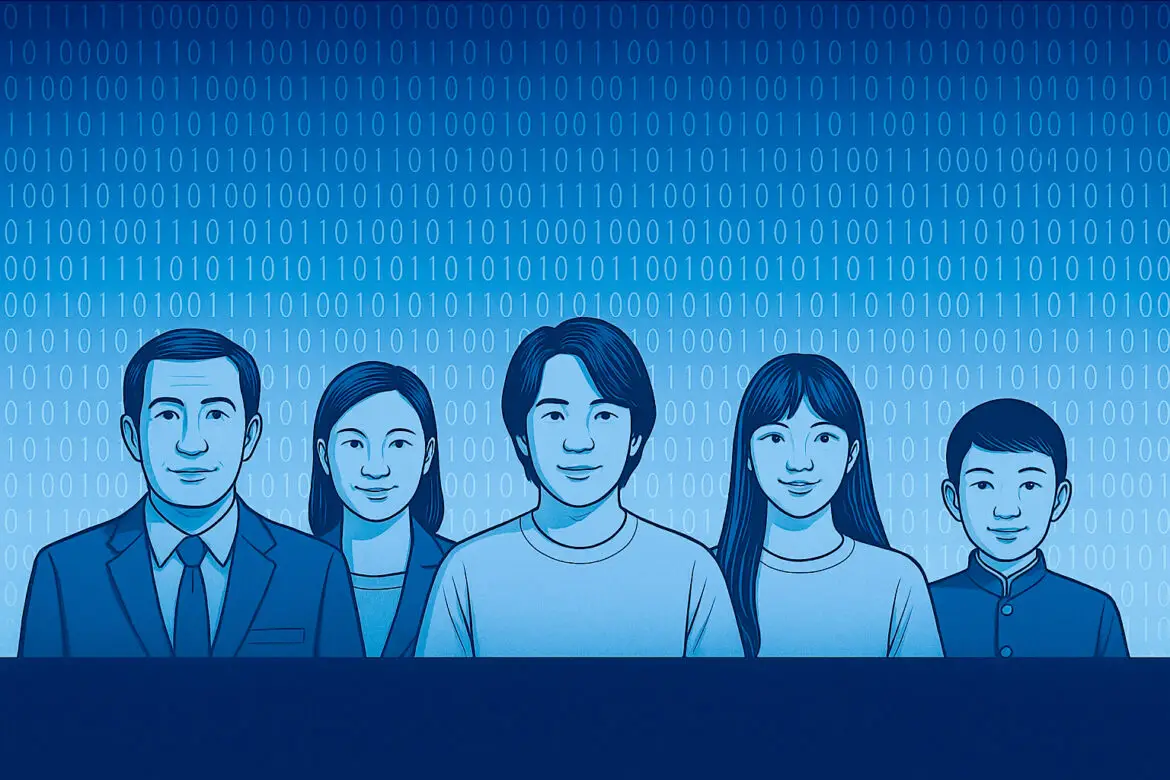
Five generations in concert: how five workplace operating systems can be written into one cross-generational protocol Five Generations under AI, Future
Five Generations under AI | The post-10s: finding a place in a “world without jobs” Five Generations under AI, Future

Five Generations under AI | The post-00s: how does the “sandwich layer” of the AI transition break through? Five Generations under AI, Future
Five Generations under AI | The post-90s: meet AI head-on, and shape the future with the machine Five Generations under AI, Future
Five Generations under AI | The post-80s: standing on a fault line, how to cross the mid-career bind? Five Generations under AI, Future

Five Generations under AI | How can the post-70s place their experience in the age of AI?
The judgment, restated
My judgment is that the post-10s are not without work; they have, in a “world without jobs,” first to define their own growth OS and their own boundary.
Three things this week
- Write a “digital-identity note”: what you can do, and what an agent can take over.
- Set a learning boundary (which abilities you must train yourself, and which can be outsourced to the system).
- Do a small project: use people + an agent to finish one result that can be shown.
The series overview is in Five generations in concert. You are welcome to subscribe to Future Insights Lab, or to reply and discuss the sticking points in your positioning.