
Introduction|The key proposition for Taiwan’s 70後
In Taiwan’s generational narrative, people born in 1970–1979 (the 70後) are a backbone force that has been highly expected, has repeatedly held up under pressure, and is often overlooked. They span the late martial-law years and the sharp changes after lifting it. They lived through the “Taiwan economic miracle,” the rise of Hsinchu Science Park, and the globalization of the PC / OEM–ODM industry. They also carry the collective memory and resilience training of the 1997 Asian financial crisis, the 1999 Jiji (921) earthquake, SARS in 2003, and the 2008 financial crisis. The “standard answer” of school, the “SOP and quality assurance” of the workplace, and society’s “climb steadily upward” were once their compass. Now generative AI, agentic systems, and platform-based collaboration are rewriting the rules, making this generation at once the group that most needs to recast itself, and the group that finds it hardest to turn. In this piece I try to return to a Taiwan setting, and to understand the 70後’s context, anxiety, and possibilities: how to keep experience from being swallowed by the age, and recast it as the skeleton of a new order.
NO° 01|The Taiwan background of the 70後: a generation shaped by a “structural dividend”
If structure and discipline are the two scales, most of Taiwan’s 70後 are a generation shaped by structure. The “single right answer” logic of the high-school and university joint entrance exams cut problems into fragments that could be scored, and trained the habit of pursuing a steady performance under a clear rule. Once they entered the workplace, quality systems (ISO / TPM / Six Sigma), supply-chain lead times, and export inspection let them accumulate reputation and performance inside SOPs, forms, and audits. For many people, “effort will be seen, and years of service will be recognized” was a fairness you could expect. This structural dividend was shared nationwide: the science park drove the manufacturing chain from upstream to downstream, foreign and local firms expanded together, and a business cycle every seven or eight years became a collective understanding that “if you endure it, it will be all right.”
The shelter of structure, however, also brought path dependence. What the 70後 are best at is “doing the thing right inside an existing frame.” Faced with a cross-border specification, a rigorous process, and a harsh timetable, they can, with patience and resilience, turn uncertainty into a variable that can be controlled. When scorecards, audit points, and reporting chains make up the grammar of a career, they naturally treat “keeping order” and “walking the institution” as the way forward with the lowest risk. This capability once brought a win for both the individual and the organization: complaints fell, yield rose, lead times were stable, the team erred less, and the 70後 therefore received a ticket to a management post and a strategic position.
But what AI brings is not only “a faster Excel.” It is a swap of the whole logic: decisions move from reporting up, layer by layer, to end-to-end semantic orchestration; tasks move from people handing on a ticket to an agent triggering automatically; knowledge moves from “documents as evidence” to “ask and you have it.” When the meaning of a layer is thinned, the granularity of a process is rewritten, and the scarcity of information disappears, the structure the 70後 have leaned on begins to loosen. The difficulty is not that the tools are unfamiliar. It is that the anchor of order has moved — the familiar staircase is being rebuilt, and the new elevator has not yet been fully accepted.
NO° 02|AI’s positive effect on the 70後: “upgrading experience into a system”
First set the anxiety down. AI is also opening a second curve for the 70後. The most immediate change is this: tacit knowledge accumulated over many years can, for the first time, be structured reliably. In a Taiwan industrial setting, whether it is a rule of thumb for SMT yield, the design of a script for a complaint closed loop, peak-and-trough rostering in store operations, or the fine points of acceptance in a B2B project, it all used to flow by “word of mouth” and an “apprentice system.” Now RAG and an enterprise knowledge graph can turn these bases of judgment into nodes that can be retrieved and cited, forming a “digital standard of judgment” that can be maintained and traced. The 70後 no longer have to “teach until it is right,” again and again. They design “so that the system will be right”: distilling a method into decision support, a training module, and a reasoning template, and upgrading from “I can do it myself” to “the organization can do it.”
Second, the hard labor of management can finally be handed to the machine. Intermediary work such as attendance, expense control, chasing progress, and process approval can be finished automatically by AI under permission governance and an approval logic, freeing a large amount of a manager’s time and energy. For a 70後 manager, that means leadership can be upgraded from the “hard-labor type” to the “architecture type”: moving attention from “how many tickets did I approve again today” to “how can our rules be fairer and more effective”; from “watching the process and fighting fires” to “designing the mechanism and aligning the direction.” When an agent takes over the chores, a person’s value can finally be placed on “defining the boundary, handling exceptions, and integrating people’s hearts.”
Finally, the 70後 naturally have the role of a stabilizer in multi-generational work. Generation Z and the 00後 value their own rhythm, and like remote and project-based work; AI makes this more fluid form still more normal. At this point, the 70後’s political wisdom, organizational memory, and nose for risk can serve as lubrication and arbitration between agent and human: what to hand to the machine, when to escalate to a person, how to balance efficiency and compliance. If these judgments can be settled as a “decision code” and an “exception-handling handbook,” the 70後 are no longer only keepers of what already works. They are also designers of a new order.
NO° 03|The shock of a structural change: identity decentered, power out of focus, technical anxiety
The challenge of AI is not “one more tool.” It is “how power is redistributed.” For the 70後, the first shock is a loosening of the center of identity. Years of service and a title used to be a pass for authority. Now “a younger person + AI” can quickly produce a respectable plan and report. When information is not scarce, and output is not rare, seniority ≠ authority, and whether you understand AI becomes a new line of recognition. For a generation used to accumulating public trust through years, this sense of weightlessness runs straight into self-respect, and can even make a person wonder: “does the equation of effort I used to believe in no longer hold?”
The second shock comes from the blurring of organizational boundaries. Taiwanese companies have long kept a subtle balance between bureaucracy and family governance, and the 70後 are good at reading the reporting line, the line of duty, and the line of influence. But in an environment where platform working and remote projects prevail, the layers thin, the projects multiply, and the nodes of collaboration keep moving. The source of power shifts from “the post” to “whether you can integrate resources and persuade people.” Going further, when an agent takes over intermediary tasks, and work is broken into micro-processes that can be dispatched, the value of the 70後’s former “chokepoint” is diluted, and the sense of place is naturally shaken.
The third shock is technical anxiety. Prompts, agents, RAG, multimodal models, private deployment, open-source models… the rhythm of updates means that “not yet fluent” is always today’s progress. It is not that the 70後 are unwilling to learn. They lack a safe practice field. First, the burden of identity is heavy (if a manager or a senior asks a “beginner question,” there is easily pressure on face). Second, time is squeezed from both sides by family and work (the sandwich generation). Third, a situation of learn-and-use-at-once is hard to arrange on purpose. The result is “the less sure you are, the less you touch it; the less you touch it, the more you are labeled as behind,” forming a vicious cycle.
NO° 04|A path of breakthrough: from the owner of experience to “the systematizing of experience” and “the designer of a new structure”
The first step of a breakthrough is to change the identification of identity. The 70後 do not have to compete with younger people on fluency of operation. They should extract years of “experience of doing it right” into the organization’s “method of doing it right.” In practice, you can start with the three kinds of situation you are most fluent in — for example, project acceptance, a critical complaint, and a negotiation with a cross-border client — and, one by one, pull out the factors of judgment, the common branches, and the threshold conditions, write them as rules and a semantic description a machine can read, and then, with RAG and a rules engine, make them into a “decision template.” In this way, experience is no longer trapped in a person. It can be reused, iterated, and checked quantitatively.
The second step is to evolve from “manager” into “architect.” What is scarce in the age of AI is not the ability to execute, but the ability to “compose people + agents + institutions into a system that can run.” If the 70後 can grasp how to break an SOP into a chain of tasks that can be triggered, how to set a permission boundary for an agent, how to design the gate for exception escalation and human involvement, and how to write outcome metrics and governance rules into the process, they can turn from “holding a position” to “building a road.” This is a new source of influence: making it easier for other people to do the thing right because of your architecture.
The third step is to connect with younger people through vision and trust. The source of authority is moving from the job title to “whether you are reliable.” When a 70後 can, with clear judgment, a stable temperament, and sincere accompaniment, build a cooperative relationship that can be expected, the team will see you as “the most trustworthy partner,” not “the person who most needs to be reported to.” This needs practice on purpose: opening with a question rather than an instruction, responding with alignment rather than denial, closing with a review rather than the assignment of blame. AI has freed time from execution; invest it in relationships and culture — that is a soft-and-hard boundary a machine can never replace.
NO° 05|Closing: 70後, do not only “retire with dignity” — please take on your second definition
“I am almost retiring; don’t force me to learn AI.” Behind this sentence is tiredness, and also the instinct to protect self-respect. But the ticket to the age of AI is not issued only to younger people. It is also a chance for the 70後 to rewrite the narrative of their value. You do not have to become young, and you do not have to become an engineer. What you have to do is let your seasoned weight keep shining in another way: no longer only the owner of experience, but the designer of a method; no longer only the executor of the organization, but the rebuilder of the structure; no longer only the person who “manages people,” but a guide who can help people release their potential. AI is remaking the world, and the 70後 can become the most critical bridge between the old order and the new logic — upgrading experience into an institution, translating stability into confidence, and turning culture into competitiveness. This is not an exit. It is a continuation.
Topic | Five Generations under AI (AI洪流下的五代人)
Five Generations under AI, Future
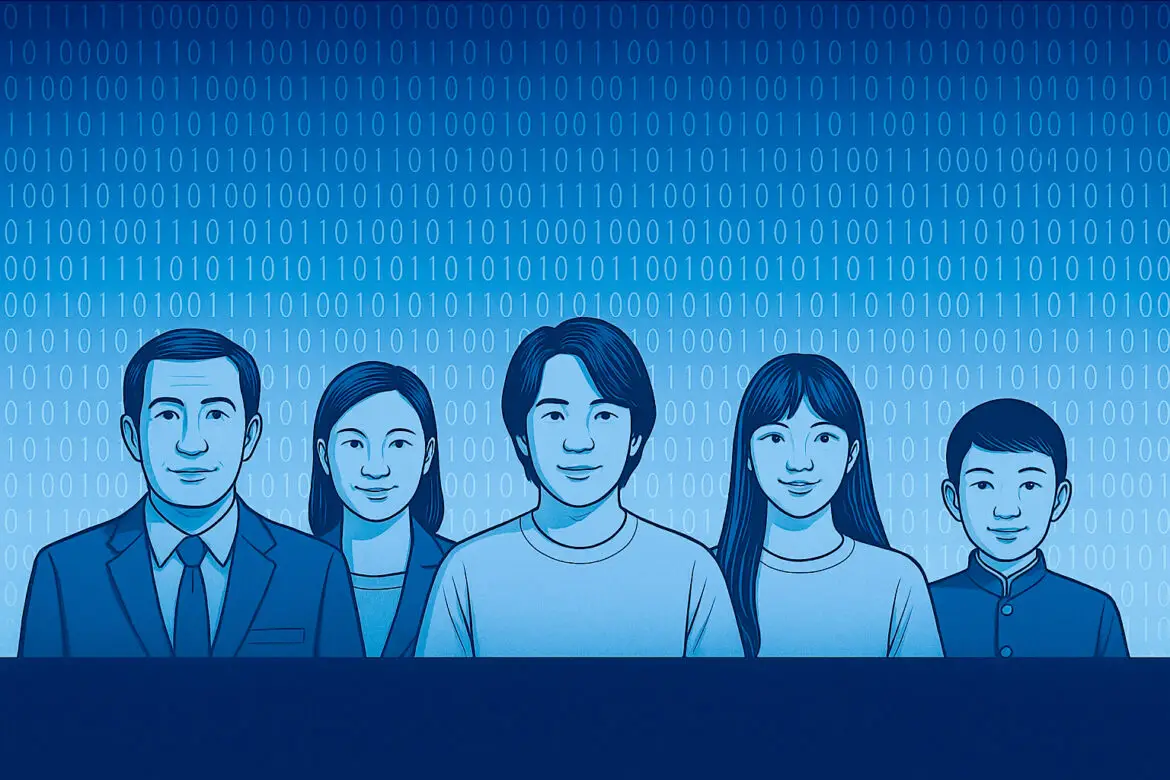
Five generations in concert: how five workplace operating systems can be written into one cross-generational protocol Five Generations under AI, Future
Five Generations under AI|The 10後: finding a place in a “world without jobs” Five Generations under AI, Future

Five Generations under AI|The 00後: how does the “sandwich layer” of the AI transition break through? Five Generations under AI, Future
Five Generations under AI|The 90後: meet AI head-on, and shape the future with the machine Five Generations under AI, Future
Five Generations under AI|The 80後: standing on a fault line, how to cross the mid-career bind? Five Generations under AI, Future

Five Generations under AI|How can the 70後 place their experience in the age of AI?
The judgment, restated
My judgment is that if the 70後’s experience is not systematized, no amount of AI will carry it away — what has to be placed is a transferable template, not a memory.
Three things this week
- Pick three pieces of critical experience, and write them as “situation → judgment → action → acceptance” templates.
- Hold one coaching conversation, and turn a tacit standard into a rule that can be taught.
- Name a knowledge heir, and complete a handover drill within two weeks.
The series overview is in Five generations in concert. You are welcome to subscribe to Future Insights Lab, or to reply and discuss the sticking points in placing experience.