
Through 2024–2025, the AI industry has been turning rapidly toward an agents-oriented (agentic) architecture. Consumer applications such as OpenAI’s ChatGPT, Grok (led by Elon Musk), and Google’s Gemini have come to market one after another, and have driven a wave of “AI agents.” By comparison, adoption of an AI-agent architecture on the enterprise side is still at an early, exploratory stage. The pace of deployment is more cautious, and the complexity of systems integration and governance is clearly higher.
When introducing AI agents, companies face a set of practical challenges. The first difficulty is how to ensure the quality and reliability of the model’s output. For that, companies urgently need rigorous evaluation standards and a mechanism of continuing monitoring, so that AI agents do not act without control, and “intelligent automation” does not turn into operational chaos. At the same time, how to build a complete governance frame and risk control, and how to draw a clear line of responsibility in human–AI collaboration, so that autonomous decisions fit the company’s ethics and regulatory standards, are problems that cannot be avoided.
In response to these trends and challenges, Antonio Gulli’s team at Google recently published the Agents Companion white paper as the core material for observation and understanding. It goes in depth into AgentOps (the operations of AI agents), Agentic RAG (agent-oriented retrieval-augmented generation), and multi-agent collaboration, and offers companies a full theoretical and practical guide for deploying AI agents. In what follows, this piece looks, from the vantage of brand owners, digital-transformation leads, and product decision-makers, at six key issues in the white paper, and brings localized, workable insight for Taiwanese companies.
I|Multi-agent systems and single-agent systems: the essential difference, and what it means for the business
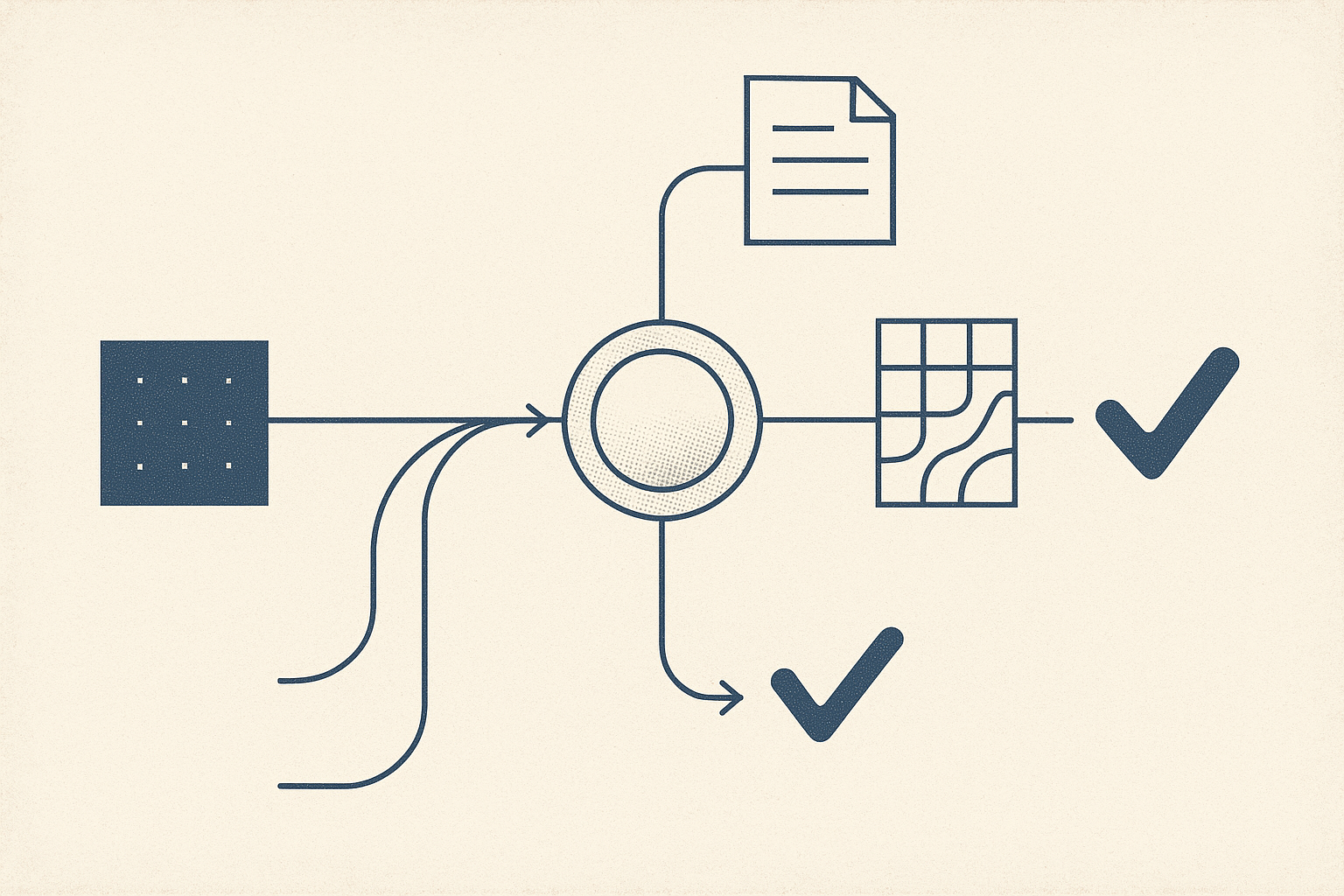
As AI applications grow more complex, the difference between a multi-agent system and a single-agent system is deeply affecting a company’s digital strategy. A single-agent system can be seen as an AI assistant “fighting alone,” usually executing a clearly defined task independently. A multi-agent system is more like a team of specialists, each playing a different role, collaborating to finish the work. In essence, a multi-agent architecture breaks a complex problem into sub-tasks and hands them to specialized agents to divide the labor, so that the AI as a whole has an adaptive, more efficient, and more explainable workflow. In a customer-service setting, for example, one AI agent may be responsible for looking up a user’s data, another for handling a refund process, and a third for sentiment analysis and the reply; working together, they can automate the whole service process — something a single giant model would find hard to do well.
The key advantage of a multi-agent system is specialization and collaboration: each agent can go deep in its area of strength, they can cross-check one another’s results, and overall precision rises. Several agents can also process sub-tasks in parallel, sharply shortening the time to finish the work, and if one agent fails, another can step in, raising resilience. By comparison, a single-agent system has a simpler architecture and unified management, but often, because it acts as a “generalist,” finds it hard to cover every face. In commercial practice, that means a multi-agent architecture is a better fit for complex, cross-domain tasks: an internal information query that involves legal, financial, and technical knowledge at once, for example, can be finished by several agents, each specialized in a different domain. A single agent may be a better fit for a single, clearly bounded function, such as writing marketing copy or a simple customer-service Q&A.
Of course, multi-agent collaboration also brings new challenges, such as the cost of communication and coordination among agents. Companies need to build a sound mechanism of agent orchestration, to make sure messages and tasks pass smoothly among agents, and to avoid confusion or rework. The complexity of developing and maintaining a multi-agent system is also higher: the performance of each agent has to be monitored, and the collaboration strategy continually adjusted. All of this requires corresponding adjustments in technical architecture and in the team’s division of labor. For a company pursuing digital transformation, though, investing in a multi-agent system will often bring larger commercial value — because it lets AI no longer be limited to a single-point function, and instead expand into an AI team that can adapt flexibly to many situations.
II|AgentOps: the evolution from MLOps to organization-level governance of AI in production
When a company pushes an AI agent from a proof of concept into an actual production environment, quality and reliability become the largest challenge. Google’s latest white paper stresses that the traditional machine-learning operations process (MLOps) has to be extended further into AgentOps (the operations of intelligent agents) if increasingly complex agent deployments are to be managed effectively. AgentOps is a sub-domain of generative-AI operations (GenAIOps). Its core is how to let an AI agent run efficiently and reliably in production. Compared with MLOps, which concentrates on training and deploying models, AgentOps additionally covers the management of tools, the orchestration of an agent’s “brain prompts” (objectives, settings, instructions), short- and long-term memory mechanisms, and the decomposition of tasks. In other words, it extends the best practice of DevOps and MLOps to the agent layer, to make sure the agent can continue to deliver value.
From the vantage of enterprise governance, AgentOps means bringing AI agents into an operations process as rigorous as that of a traditional IT system. First come version control, automated CI/CD deployment, log monitoring, and security mechanisms — the basic work of DevOps is just as indispensable in AgentOps. For example, an agent’s calls to an external API need the same authentication and error-handling mechanisms as ordinary software, to make sure they are safe and stable. Second is metric-driven improvement: after each agent goes live, its key performance indicators (KPIs) should be monitored, and improved continually through methods such as A/B tests. The metrics here should include not only the agent’s success rate at finishing a task, but also the effect on final business value — how much productivity was raised, how much revenue was created, and so on. A successful implementation of AgentOps needs coordination among technology, process, and people, so that AI-agent technology is woven deeply into the organization’s operating model. That is to say, when introducing AI agents, a company must at the same time adjust the internal division of labor and the process, and be clear about who develops these agents, who supervises them, and who is accountable when a problem appears.
It is worth stressing that AgentOps is not a substitute for the existing process. It is an addition on top of the existing foundation of DevOps/MLOps. Traditional IT and machine-learning experience still applies — for example, building unit tests to verify that an agent’s tool calls match what was expected, or using a security sandbox to test agent behavior and prevent risk. What is newly added is the operations content particular to agents: version management of tool plugins, version management of prompt templates, and the frequency with which the agent’s memory store is updated, among other things. For the company, that means building new capabilities and teams — for example, an “AI agent engineer” or a “PromptOps” specialist, responsible for continually improving the agent’s prompts and the effect of knowledge integration. Only with an organization-level frame for governing AI in production can a company take a set of AI agents from the demo to mature, stable “digital employees.”
A further observation
Specialized platforms and tools to support AgentOps have begun to appear in the industry. Google Cloud recently launched the Agentspace platform for enterprises, emphasizing built-in security, monitoring, and other enterprise-grade functions, so that developers can deploy a multi-agent system in production quickly. According to the Google team, they have already built their own AI agents on the platform, and plan to launch more related functions in 2025, to help developers build and manage agents more easily. These movements show that AgentOps is landing from an idea into actual tools, helping companies make the management of AI agents part of everyday work. At the same time, some leading companies have also recognized that “if you cannot see it, you cannot trust it” — only by building a complete mechanism of monitoring and governance can you confidently hand a critical task to AI.
III|Agentic RAG and a new logic for AI search: from query to the strategic orchestration of knowledge
As the volume of enterprise data explodes, traditional AI search is giving way to a new model of strategic knowledge orchestration. Among these, Agentic RAG (Agentic Retrieval-Augmented Generation) is seen as a breakthrough in the new logic of retrieval-based generation. The traditional RAG process is relatively rigid: when a user puts a query, the system retrieves a few related passages from a vector database and hands them to a large model to generate an answer. This one-shot retrieval, however, often falls short when the question is vague, multi-step, or needs information from more than one angle. Agentic RAG introduces an autonomous retrieval agent, which can reason repeatedly and optimize the search according to the query — like an information hunter moving back and forth across several sources, until a reliable answer is found.
Under an Agentic RAG architecture, the AI agent unpacks the original natural-language question and turns it into a series of sub-queries, exploring the relevant domain of knowledge step by step. Concrete strategies include: dynamically expanding or recombining the query (avoiding a reliance on a single keyword match); multi-stage retrieval (first looking for the overall concept, then going into the specific detail); intelligent selection of sources (different agents retrieve against different types of knowledge base — structured data, unstructured text, or images); and bringing in an evaluation agent to cross-check whether the information is true. The last is especially important: a specialized agent can fact-check the content the main agent has retrieved and detect contradictions, filtering out possible errors before the answer is generated, and reducing hallucinations. Through this autonomous iteration, Agentic RAG can provide answers that are more accurate and more contextually relevant than traditional RAG, and can substantially raise the reliability of information retrieval in decision support.
For the company, the new value Agentic RAG brings is a qualitative change in knowledge management and in the efficiency of search. In the past, a staff member might have needed to try a query several times, and browse several systems, before piecing together a complete answer. Now, an intelligent agent can take over this tedious process, automatically orchestrating various knowledge sources for the user and assembling the result. In a legal and compliance setting, for example, an agent can first retrieve from a database of laws and regulations, then query the company’s internal policy documents, and finally assemble the result into a recommended action with the sources listed — saving the legal team a large amount of time. What is more, the adaptability of Agentic RAG lets it keep up with information that changes quickly: faced with the latest market movement or technical material, the agent can automatically adjust its retrieval strategy to make sure the information is the newest and the most relevant. This capability of “intelligent search” truly turns the company’s mass of internal data into insight that can be taken up and used at once, and strengthens the immediacy and accuracy of decisions.
It is worth noting that even a powerful retrieval agent still needs a sound data infrastructure underneath it. Google’s white paper suggests that companies first optimize the building of their own search engines and knowledge bases — for example, by semantically chunking documents and adding rich metadata, to raise the coverage and precision of the underlying search. At the same time, a vector database can be combined with a traditional ranker, to make sure the results returned are both relevant and concise. These best practices have already been built into Google’s enterprise products — Vertex AI Search, for example, offers a series of functions such as document parsing, embedding fine-tuning, fast vector search, and re-ranking, so that developers can build Agentic RAG applications more easily. In other words, AI search in the future will no longer only answer a user’s single question. It will be able to orchestrate strategically according to the need of the task, to raise related questions on its own, and to integrate knowledge from more than one source — becoming, in the company’s knowledge store, a “search mind” that can actually think.
A further case
The idea of Agentic RAG is landing across industries. Some financial-intelligence firms, for example, have already developed an agent to improve the search of research reports: the agent first generates several precise sub-questions from a vague investment question, then searches internal research reports one by one, and finally assembles an analytical conclusion that has a basis. In its conclusion, Google also notes that this multi-agent reinforcement of retrieval-augmented generation can significantly improve the relevance of the answer — provided the company also strengthens its own search capability in parallel, including semantically chunking documents, enriching annotations, fine-tuning vector embedding models, and adding a traditional ranking step to vector-search results. Agentic RAG is therefore both a test of an AI agent’s capability, and a full challenge to the company’s data governance and search technology. In the near future, the companies that actively upgrade their internal search infrastructure and adopt Agentic RAG will be able to take the lead in a knowledge economy.
IV|Evaluating and monitoring agents: KPIs, trajectory tracking, and a human-feedback mechanism
However capable an AI agent is, if a company cannot effectively evaluate and monitor its behavior, it will find it hard to hand the business to it with confidence. “If you cannot observe it, you cannot trust it” is especially true in the governance of AI agents. First, the company needs to set clear key performance indicators (KPIs) for the agent. These include results at the business level (for example, whether a customer-service agent has raised customer satisfaction or shortened the time to solve a problem) and metrics at the task level (such as the rate at which the agent completes its objective, and the share of critical steps executed). Most agents are designed around a particular objective, so the completion rate of the objective is one of the most central measures. In addition, each objective is often broken into several critical tasks or points of user interaction — the company should monitor the number of attempts and the success rate of these critical links independently, to find the weak links in the agent’s process. Besides whether the task succeeded, traditional IT-operations metrics such as response latency and error rate apply equally to measuring the quality of an agent’s running. These higher-level metrics can be assembled on a dashboard, to help managers grasp at any moment the agent’s effect on the business.
Looking only at the result, however, is not enough for a full evaluation of an agent. An AI agent often executes a chain of action steps (a trajectory) before producing a final answer. We therefore need to monitor what the agent did in the process: which tools did it use? What was the input and output at each step? Were there surplus or ineffective operations? This tracking of the action trajectory helps us understand the agent’s decision logic and adjust it. In practice, developers can design an ideal reference trajectory for each task, and then compare the agent’s actual behavior with the ideal path. For an online customer-service agent answering a refund question, for example, the expected trajectory might be: look up the order → check the return policy → give the reply. If the agent leaves this path (for example, by unnecessarily looking up logistics status), the departure can be found and improved in time. Academic and industry practice have already produced some automated methods for evaluating a trajectory, such as exact match (the agent’s sequence of steps is treated as a success only if it is identical to the reference) or a looser match (surplus steps are allowed so long as the order of the core steps is correct), as well as precision/recall and similar metrics to measure the relevance and the omission rate of the tool calls the agent executed. Presenting multi-dimensional trajectory metrics in a visualization such as a radar chart can show intuitively where the agent performs well, and where it still has to be strengthened.
Of course, even a complete automatic evaluation system cannot replace human judgment. A human-in-the-loop mechanism is therefore indispensable at the critical links. On one side, the company should encourage end users (whether staff or customers) to give feedback on the agent’s output — for example, a simple thumbs-up or thumbs-down, or a comment form. This frontline feedback can point directly to the agent’s actual usefulness, and help find problems such as “was the agent’s answer useful? Did it misunderstand the need?” The sources of feedback can be wide: ordinary users, internal quality reviewers, and domain specialists can all take part in commenting on the agent’s performance. On the other side, in highly specialized or high-risk tasks (such as a medical diagnostic suggestion, or assistance with an investment decision), human specialists should review and gate the agent’s critical decisions — not only for safety, but also to keep calibrating the agent’s evaluation model. Google notes, for example, that a large model can be used as an “autorater” to score an agent’s answers, but that in the end human feedback is still needed to adjust the bias of these automatic raters. In short, human involvement makes the evaluation loop of the agent more complete: people provide higher-level judgment and a consideration of values; the machine is responsible for monitoring the detail and for speed. Only the two together can make sure an AI agent is both efficient and in line with human expectations.
Further information
To simplify the monitoring and debugging of agents, some specialized tools have appeared on the market. LangSmith (from the LangChain team), for example, offers a visual trace of an agent’s decision process; developers can see each step of the agent’s action and the prompt it used, which helps in diagnosing a problem. Other companies have adopted a “two-agent review” mechanism: a second agent watches the behavior of the first, and provides a record similar to an audit report. More forward-looking companies have begun to establish an AI governance committee, to review the KPIs and failure cases of AI agents on a regular basis, and to make sure agent decisions follow the company’s ethics and compliance requirements. Some financial institutions, when introducing an AI assistant, require a monthly analysis of the types of wrong answers the agent has given, with the risk-control team reviewing the plan for improvement. The common idea behind these measures is this: if you treat an AI agent as a new “digital employee,” you have to build a system of supervision and evaluation similar to that for a human employee, and guarantee, in an institutionalized way, that the agent brings positive value to the company.
V|From AI assistant to virtual contractor: how a company designs responsibility, specifications, and the allocation of resources
As the capability of AI agents grows, and the tasks they take part in become more critical, companies have begun to upgrade their positioning from a mere assistant to a virtual contractor (a contractor agent). A virtual contractor means that the company constrains and manages the AI agent in a way similar to an outsourcing contract: each agent is assigned a clear task contract, specifying the objective, the scope, the deliverables, and the acceptance standard, and a mechanism of feedback and responsibility is built. This shift comes from a practical need — when we want AI to execute a complex task autonomously, a stretch of informal prompt is often not enough to guarantee a reliable result. Just as when you work with a human outsourcing team, you have to use a contract to make the scope of the work and the expected outcome clear, an AI agent also needs a similar formal specification to “draw a red line.”
Under this frame, when a company designs an AI task, it draws up an “agent contract.” First, the contract sets out in detail the objective of the task and the criteria of success: it makes clear “to what degree the agent has to do it for the work to count as finished,” and the measurable indicators of acceptance. If an AI market analyst is asked to write a competitor report, for example, the contract might specify that the report must include particular chapters, cover which competitors, that the data sources must be verified, and that the wording must fit the company’s style guide. These are the specification of the deliverable, and the basis against which acceptance is checked. Second, the contract defines the scope: what the agent should handle, and clearly what does not belong to this task. In the example above, the contract can state that the AI does not need to analyze the company’s financial report (if that is outside the purpose of this analysis), to prevent the agent from spending its energy on secondary content. In this way, the company limits the agent’s autonomy inside a controllable boundary, and avoids errors from “free play.”
Another critical design is the mechanism for allocating resources and setting priority. When several AI agents inside a company are running several “contracts” at the same time, how should resources (compute, API quota, data-access rights) be allocated? For that, the contract can include a priority field or an SLA (service-level agreement), making clear the importance of the task and the grade of resource it requires. The execution engine needs, on the basis of these contract settings, to make sure a high-priority agent receives enough compute and runs in time, and that a non-critical agent gives way when resources are tight. This is similar to a company ranking urgency in the dispatch of people, to guarantee that overall capacity is optimized. In addition, the contract’s allowing communication and feedback is a necessary link. Ideally, after an AI agent receives a task contract, it can first do a “contract review,” judging whether it fully understands the requirement and whether it has the capability to finish it. If there is a doubt, the agent can, through an internal mechanism, raise a clarification or an adjustment with the person who initiated the task (similar to a contract negotiation). This process of contract iteration makes sure the agent does not act hastily under a misunderstanding of the objective. At the same time, while the task is under way, the agent can also, at the nodes specified in the contract, feed back progress or difficulties encountered, so that the human owner can step in in time to help or to amend the contract. The whole process is meant to introduce a closed loop of humans managing AI, so that the AI, like a contractor, is responsible for its own contract and for the quality of the result, while the company plays the role of supervision and evaluation.
It is also worth mentioning that the virtual-contractor model allows a task to be decomposed further: when a contracted task is too large or too complex, the AI agent can, according to rules set in advance, split it into several sub-contracts, and call other assisting agents to finish them. If an AI product-manager agent is made responsible for “designing the concept of a new app,” it may go on to generate sub-contracts such as “market research,” “feature planning,” and “financial forecast,” assign them to a specialized market-analysis agent, a requirements-analysis agent, and a finance agent to divide the labor, and finally assemble the result itself. This general-contractor / sub-contractor model of AI collaboration lets a complex project also be finished, under a strict contract frame, by a collaboration of several agents, with each sub-task clearly defined and with an acceptance standard. For the company, the benefit is that it can be managed and controlled: what each AI agent is executing, and what result it has produced, is clear at a glance. If the outcome does not meet the contract standard, the agent can be asked to retry, or even be replaced, just as with a human contractor. In the division of responsibility, the company can also define more clearly which sub-link an AI error came from, which makes accountability and improvement easier.
A further case
Google has introduced the idea of an “agent contract” on the Agentspace platform, sketching a blueprint for how companies will apply AI in the future. According to the white paper, Agentspace defines a complete contracting process for agents: from drawing up the contract and distributing it to the agent for execution, through monitoring during execution, to acceptance of the result and feedback, forming a closed loop. These practices let us see that future AI agents will be more deeply embedded in the company’s process, and managed in an institutionalized way. AI is no longer a black box that plays freely, but a “digital contractor” bound by a contract, collaborating with human employees, creating value for the company, and accepting evaluation. This shift has a chance to raise substantially the reliability and transparency of AI application, and at the same time it forces the company itself to build a more mature system of AI governance.
VI|A working example: Google Agentspace, NotebookLM, and the possible remaking of the enterprise intranet
Faced with the possibilities a multi-agent system brings, Google has also provided concrete working examples — Agentspace and NotebookLM — that show how an enterprise’s internal information ecology can be remade by AI. Google Agentspace is an enterprise AI solution launched by Google Cloud. It integrates enterprise search, conversational agents, and workflow automation, with the aim of building an AI information and assistant platform inside the company. Traditional enterprise knowledge-management systems often have limits such as scattered content, a lack of personalization, and an inability to answer automatically. Agentspace uses AI to integrate various scattered sources (documents, email, databases) under the same interface, so that staff can query in natural language and obtain an answer that is clearly organized and has a basis. Going further, Agentspace can also drive a complex agent workflow: that is, staff can not only ask it a question, but also assign it a task to execute autonomously — for example, automatically generating a first draft of a weekly report, or automatically assembling a bug list from customer feedback. Throughout, Agentspace puts weight on security and trustworthiness: its architecture is based on Google Cloud’s security design, with built-in mechanisms such as access control (RBAC), VPC Service Controls, and identity and access management (IAM), to make sure data is protected at all times and fits the company’s compliance requirements. For managers, Agentspace offers a supervision dashboard to orchestrate and monitor several AI agents — which agents are running, which data they have used, what problems they have encountered, all in one view. It can be expected that, as platforms of this kind spread, knowledge workers in the future will shift from “searching for material everywhere” to orchestrating AI agents in a unified way to obtain information and finish a task, and the company’s internal information network will become more intelligent, and more centered on people.
Another product worth watching is NotebookLM (notebook language model). It is positioned as a research and learning assistant, and is in essence a platform that lets AI help a user read and organize material. In an enterprise setting, staff often face a large volume of documents and reports that have to be studied. The enterprise edition of NotebookLM is designed for this: a user can upload documents from various sources (for example a PDF report, a meeting record, a web article) into a NotebookLM workspace, and the AI model then parses these documents, extracts key concepts, and generates a summary or notes. The user can talk with NotebookLM, ask about a detail in a document, have it explain the meaning of a passage, or even ask it to string together the views of several documents for a comparative analysis. It is equivalent to a dedicated research assistant, helping knowledge workers get free of tedious information-gathering and go straight to understanding and decision. The enterprise edition of NotebookLM goes a step further in function: it offers, for example, an AI-generated audio summary, so that staff can “listen” to the main points of a report and deepen their grasp of the content. At the same time it emphasizes enterprise-grade security and privacy: all data processing follows the company’s security policy, and sensitive information is strictly protected and will not leak. This lets NotebookLM be woven into everyday enterprise workflows — new-product research, competitor-intelligence analysis, internal training, and the like — and become an important link in the knowledge-management system. In the future, we may see NotebookLM combined with a system such as Agentspace — the former as an employee’s personal knowledge assistant, the latter as the company’s intelligent information hub — together building a new generation of enterprise intranet.
Taken together, Google Agentspace and NotebookLM point to a large possibility for remaking the enterprise intranet. A traditional intranet is often a static document library or a list of FAQs. The intranet of the future will look more like an intelligent interactive portal: a staff member raises a task or a question, and behind it a whole network of AI agents collaborates in the handling — from searching for knowledge, through analysis and organization, to executing an operation — and finally presents the result to the staff member in a form that is natural and easy to understand. This not only raises the efficiency of obtaining information substantially; it also changes the way knowledge flows inside the organization — knowledge is no longer isolated in a departmental folder, but is circulated in real time under the impetus of AI and turned into decision support. A company can, according to its own needs, customize a series of dedicated AI agents: a marketing-insight agent, a legal-and-compliance agent, a financial-analysis agent, an engineering knowledge-base agent, and so on, so that people in each department have an intelligent assistant that fits the background of their work. These agents can even connect directly to internal systems and execute operations (inside the scope of authorization), truly upgrading the intranet from an information center to a center of action. Of course, this also requires the company’s IT architecture to be more open and more secure, so that AI can access various data and services, while the agent’s behavior is audited and constrained. The remaking of the enterprise intranet in the future is both a technical engineering project and an organizational change: the company needs to build staff’s digital literacy in collaborating with AI, and to set guidelines and ethical norms for the use of AI, so that the technology and the building of institutions move in step.
A further case
Some early movers have already begun to taste the benefit of this future intranet. The financial giant Morgan Stanley recently built a GPT chatbot for internal use, for more than 16,000 wealth-management advisors, to retrieve the company’s large internal knowledge base in natural language. This AI assistant has been described as giving every advisor a “chief investment strategist on call 24 hours a day,” able to answer all kinds of complex financial questions as soon as they are asked. By deeply integrating internal documents and research reports, it can quickly extract key insights and list the related sources for further reading. An advisor need only ask, for example, “what are the account-opening steps for a particular wealth-management service?,” and the AI will assemble a complete list of steps from several documents on the intranet, even turning the explanation into language a customer can easily understand, and attaching links to the original material. The result is that the advisor no longer has to spend a large amount of time searching and comparing documents, and can obtain a reliable answer in a few seconds, and so respond to a customer’s need more quickly. This case fully demonstrates that the value of a conversational AI intranet is practically feasible: the knowledge base is no longer a cold archive, but a conversational partner with some warmth. As technologies such as Google Agentspace and NotebookLM mature, more and more companies will remake their own internal information networks, let AI become the nervous system of the organization’s intelligence, and enable every staff member to obtain the right knowledge at the right moment and take action.
More deep-dive pieces
- ChatGPT will now show brands how often they are mentioned. That is not proof they were recommended well.
- AI will not only eliminate people: the functions being enhanced, and a manager’s handbook for this week
- AI unemployment ranking: the high-risk functions most likely to be eliminated or largely replaced
- Will AI cause unemployment? Start with the enhance / accelerate / eliminate axes
The judgment, restated
My judgment is that, from query to strategy orchestration, enterprise AI has to grow from a chat box into a multi-agent system that can be orchestrated, and observed.
Three things this week
- Draw one map of agent responsibilities (who fetches the data, who plans, who executes, who audits).
- Set a minimum AgentOps: logs, failure fallback, and the points at which a person steps in.
- Pick one intranet-knowledge pilot, and run a closed loop of “query → orchestration → replay.”
You can read this alongside From model upgrade to brand factory: Google is remaking content, insights, and retail workflows in consumer goods. You are welcome to subscribe to Future Insights Lab, or reply to discuss the bottlenecks in landing a multi-agent system.